Showing posts sorted by date for query insert. Sort by relevance Show all posts

Printing "Officially" From Your Sega Dreamcast was Possible All Along!

As many Junkyard readers will know, I’ve become somewhat obsessed with the possibility of printing from the Dreamcast. Back in the day, readers of UK Dreamcast magazines would write in asking if Sega had any plans to release a compatible printer for the Dreamcast, or if there was a way they could print webpages and the like from their console. Alas, a Dreamcast-branded printer was never released.

Indeed, I even turned this subject into an April Fools gag a few years ago with the alleged discovery of the Canon Dreamcast Inkjet prototype (model number 5L-00FLIRPA). This, of course, was a fake.

Official Dreamcast Magazine, issue 1.
Dreamcast Magazine (unofficial), issue 22.

You can see above that in issue 22 of the UK’s unofficial Dreamcast Magazine they even said on the record that printing from a Dreamcast was not possible. Well, here we are, all these years later, we're proving them factually incorrect! You see, there was an official Sega printer that was released only in Japan. And now I have one.

But does this mean that I can finally fulfil my dream and print off Spirit of Speed 1937 screenshots directly from my Dreamcast console? Let’s find out...

The printer in question, the “Pri Fun”, is a video hobby printer designed to capture and convert single frames of composite video into physical prints. Released by Sega in late 1995 in Japan, it’s fundamentally a rudimentary capture device that should work with pretty much anything you can plug into it with a composite cable.


At the time, Sega's educational console aimed at kids, the Pico, was pretty popular and the idea was that you could combine it with the Pri Fun to print off pictures that you'd made in the games onto photographic paper. Two games were made which officially supported the printer, Petapeta Chokkin Asoberu Zukan: Doubutsu and Sanrio Festival Tanoshii Card, but the text on the back of the box also brags that it would work with VCRs, TVs, camcorders... even a LaserDisc player! Of course, the eagle-eyed amongst you will have also spotted that along with the Sega Pico, a Sega Saturn is also displayed on the box as an option. Any game console will work with the Pri Fun as long as it outputs a composite video signal.

Unlike regular computer printers which receive precise instructions on how to print a page, this printer simply prints the current frame of video. Printing generates 4x6-inch pictures on specially adapted paper using thermal dye and each printer roll can produce up to 30 full-colour prints.

When I found out about this device, immediately my mind went into “DREAMCAST PRINTER!!” mode, and so I tracked one down from Japan. So without further ado, here's the Pri Fun printer in all its glory...

We Played the Unreleased Game "Ring: The Legend of the Nibelungen" for Sega Dreamcast

What could've been. Cover created by Dreamcast Me That.

Developed by Arxel Tribe in the late 90s, Ring: The Legend of the Nibelungen is a point-and-click adventure game that would be released for the PC in 1998. It turns out that the game was supposed to be ported to the Dreamcast a few years later, but ultimately ended up on the mammoth pile of unreleased titles which never saw the light of day on Sega’s console. And no, we’re not talking about The Ring: Terror's Realm, which unfortunately for us, did sneak its way into the console’s release library.

However, thanks to the ongoing preservation efforts of Comby Laurent from Sega Dreamcast Info, this previously unreleased title is now available to download and play via emulation or, even better, on a real Dreamcast with a real controller in your sweaty hands.

But before we get into how this title should’ve ended up on the Dreamcast sometime in the year 2000, let’s talk a little about the game itself.

I asked this chap what he thought about the Dreamcast.

Ring: The Legend of the Nibelungen is loosely based on Der Ring des Nibelungen; four German-language epic music dramas composed by Richard Wagner. Yes, that’s right, a game based on an opera. I’ve officially heard it all. Indeed, the game itself features music from various performances of the Vienna Philharmonic Orchestra conducted by the legendary Georg Solti himself.

I had to Google Georg Solti as well, don’t worry. You’ll find out he’s a Hungarian-British orchestral and operatic conductor who’s won countless awards including a British CBE, a knighthood and a whopping 31 Grammy Awards. Bet you didn’t think you’d learn that on a Dreamcast blog, did you?

Even if you’re not an opera fan, you will absolutely know the Ride of the Valkyries score which was featured in Der Ring des Nibelungen. In fact, I’ll give you a moment to go and search for it on YouTube so you can have it playing in the background as you read the rest of this article; it’ll add to the overall experience.

Anyway, back to Der Ring des Nibelungen. The scale and scope of the story told in these works is so epic that I simply don’t have enough time to cover it all here. It follows the struggles of gods, heroes, and several mythical creatures over the eponymous magic ring that grants domination over the entire world. In the game, there are four characters which you assume control of. Alberich (a cruel and sadistic dwarf king), Loge (a fire spirit), Siegmund (the son of the god Wotan), and Brünnhilde (a Valkyrie warrior).

Some of the areas in the game are beautifully atmospheric.

There are loads of additional characters and even a family tree to help you make sense of it all. In fact, the story and puzzles in Ring: The Legend of the Nibelungen are so complex that the PC release actually included an entire walkthrough in its own instruction manual! Arxel Tribe clearly had little faith that their playerbase would get their head around it all, either.

As I mentioned, Ring: The Legend of the Nibelungen did actually get a release on PC in 1998. Whilst it did enjoy significant commercial success -shifting an impressive 600,000 lifetime copies according to Arxel Tribe’s Guillaume de Fondaumière- the reviews were not so favourable. IGN described it as a “complete travesty when it comes to gameplay” on the way to awarding it a 2.7/10 score, whilst GameStop said it was “so utterly uninviting” in their 3.7/10 appraisal.

Magic frogs. For the diving helmet. Obviously.

News of a Dreamcast port in the UK media at the time was sparse, despite the fact that from what we can see now, most of the game was finished and not far away from being ready to rock. Whilst flicking through some issues of the UK’s Dreamcast Magazine, I did find a small news bite tucked away in the corner of issue four which read:

“News has broken on a forthcoming Dreamcast game from Success. The game is to be a port of the hit PC game Ring: The Legend of Nibelung, which is currently in the midst of conversion and should be with us sometime during 2000.”

No accompanying screenshot or half-page spread. It’s fair to say that this port was somewhat under the radar and so it’s unsurprising that many Dreamcast fans hadn’t heard of its existence before. IGN also reported that “the makers of Rainbow Cotton for the Dreamcast will be bringing The Ring of the Nibelungen to Japanese DC gamers. Currently, this game is listed on the Success web page as being set for release on the PC in Japan on October 29th of this year.” But again, no screenshots or noteworthy details.

The Dreamcast version of Ring: The Legend of the Nibelungen was seemingly lost forever at some point after this. Well, I say lost forever but what I actually mean is lost until the efforts of Laurent and his team managed to preserve the title for us all to enjoy.

A prototype version of Ring: The Legend of the Nibelungen was actually discovered and dumped a few years ago, but it was only a partial dump. Some of the three discs were missing meaning that the game could not be played in any logical order. But all was not lost. In a recent post, Laurent has managed to obtain dumps of all three discs and additionally some VMU save files which allow for each of the games’ chapters to be loaded and played.

The NAOMI Games That Deserved Dreamcast Ports

Ask your average gamer with a passing interest in the Dreamcast to name their favourite titles for the system, and there is a good chance that you might hear answers like Shenmue, Skies of Arcadia, or Resident Evil CODE:Veronica. The console certainly had a healthy crop of long-form, narrative-driven sagas like this which remain an enduring part of its identity to this day. However, it’s probably just as likely that the answers you’ll receive are replete with brash, high-tempo classics such as Crazy Taxi, Power Stone, or The House of the Dead 2. Titles in this vein, which were so obviously shaped by their arcade roots, also played a huge role in making the Dreamcast what it was – and some of them shifted big numbers too (OK, big numbers for the Dreamcast).

In retrospect, given what was just around the corner for video gaming, it is not uncommon to hear the opinion that Sega’s swansong console was overly reliant on arcade ports. If it were to serve evolving tastes, so the argument goes, perhaps it needed to have attracted more games that were divorced from the arcade scene. Considering the multitude of factors that coalesced to make the Dreamcast a commercial flop, it is impossible to say with any certainty whether this theory holds much weight. Personally, I suspect it may have the tiniest grain of truth to it. If so, then daydreaming about how the console’s release library could have been packed out with even more arcade titles is perhaps a little bit perverse, but this is the Dreamcast Junkyard after all, and pontificating on this type of nonsense is our jam.

The NAOMI-Dreamcast Connection

For the uninitiated, I should probably explain that, in the same year that Sega launched the Dreamcast to the home market (1998), they also launched the New Arcade Operation Machine Idea (NAOMI) system for the arcade market. And, barring a handful of differences which made the arcade system marginally superior, the two were practically twins. 

The front page of a NAOMI press release from 1998, with the Dreamcast swirl incorporated into the logo (later to be dropped in favour of clarity). Image courtesy of Sega Retro.

I am not at all technically minded, and plenty of other articles by highly knowledgeable authors have been written about the affinities between the two systems, so I won’t feign expertise and start talking about chips and memory. For now, it is sufficient to say that because of the similarities between the NAOMI and the Dreamcast, porting games from the former to the latter was a fairly simple affair. Naturally then, masses of NAOMI titles were brought over to the home market using this route - or were they?

Relying on the data assembled by the wonderful archivists of Sega Retro, by my count 159 titles were released for the NAOMI, either on ROM cartridge or GD-ROM, but only 60 of these made it over to our beloved Dreamcast. Sure, among those 60 there are many, many, stone cold classics, ranging from blockbuster hits like Crazy Taxi through to lower-profile titles that have garnered a cult following over the years, such as Ikaruga. As thankful as I am for ports like these, those numbers mean that 99 NAOMI games didn’t make the jump over to the Dreamcast, and indeed, many never left the arcade full-stop.

In certain instances, this is understandable. The Dreamcast had its fair share of bizarre accessories, but would anyone out there really have wanted to cram a StarHorse terminal into their living room? Probably not.

OK lads, back to mine for a few hours of StarHorse?

For other reasons, games like Dragon Treasure, where players sought out ‘medals’ in a thinly veiled gambling loop, were probably not well suited to the home market either. You can’t lose money to yourself after all. Yet there are plenty of other games that could have feasibly made it onto the Dreamcast, brightening up its library, bringing us hours of joy, and getting savaged by a grumpy and short-tempered reviewer in the Official Dreamcast Magazine. So, in no particular order, here are the NAOMI games that I feel should have been blessed with releases on the Dreamcast.

Monkey Ball

Landing in arcades with aplomb in July 2001, Monkey Ball had that upbeat, blue-skies aesthetic that Sega development teams of the era seem to have mastered. On the face of it, rolling a twee monkey character around maze-like platforms to collect bananas and reach an end goal is very simplistic, but the combination of platforming and puzzle elements proved to be a big hit, and the opportunity to master the controls and beat prior scores lent the game a degree of depth and replayability. 

Monkey Ball screenshot courtesy of the Video Games Museum.

Before the end of the year, the game was ported to the Gamecube as Super Monkey Ball - the first game Sega published on a Nintendo home console following their exit from the hardware market. To the delight of an ailing Sega, it was a commercial hit, spawning a quick sequel and a franchise that has remained active to this day. But really, this game’s first home console destination should have been the Dreamcast, and had it hit the arcades a year earlier, I don't doubt that I could have been clasping a well-used copy of Monkey Ball in a battered PAL case right now. Fortunately though, thanks to the dedication of Memorix101, an unofficial port is in the works, and we may well see a fully working version in the near future.

8BitMods' BitLink DC Kit Promises to Make Wireless Dreamcast Gaming a Breeze

With Sega never providing a wireless control solution for the Dreamcast themselves, the task of creating one has fallen on aftermarket companies and fans alike. There's a load of options out there: you've got controller options like Chris Daioglou's DreamConn — arguably the best solution overall, though it comes at a higher price point. Chris even created a wireless Dreamcast keyboard, in the form of the KeyConn. A more affordable alternative controller-wise is the StrikerDC Wireless from Retro Fighters, which has had been praised by those who have used it, but has compatibility issues with Dreamcast games that utilise Windows CE, and potentially corrupts saves when used with the VMUPro. If you’d prefer to use a different wireless controller altogether, or maybe a keyboard you have lying around, several adapters are available. These include the now hard-to-find Brook Wingman SD, BlueRetro adapters, and plenty of others, giving players more flexibility when it comes to wireless control methods for the Dreamcast (we know you lot love to tell everyone how much you hate the Dreamcast's original controller!)

8BitMods, the creators of the VMUPro, are throwing their collective hats into the ring with the BitLink, a new method that looks to give Dreamcast gamers the best of both worlds: not only by turning your existing stock Dreamcast controller into a wireless wonder through some easy modification, but also giving the option of allowing other controllers —both wired and wireless— to connect to the console.

The BitLink comes in two colours, classic white and smoke black, and consists of two parts. The larger piece, the "adapter," resembles a Dreamcast rumble pack, and slots into the second slot of your Dreamcast controller. To install it, you need to disassemble your controller and connect it via the "included cable to the controller's internal JST port," with no soldering required. There has been some confusion about how the controller will look once modded, with many asking whether the unused cable will just be dangling out the bottom of the controller, or if there will just be a hole where it once was. Hopefully 8BitMods will clear up some of the confusion soon.

Once done, your controller becomes wireless, with rumble, on-board storage (four virtual flash memory cards worth), and a battery that will also charge your VMUPro if you insert into slot one. It supposedly will also have "motion control", and we're intrigued to see how that can be utilised...

The thing that makes this adapter talk with the system is the dongle (pictured below), which can also use Bluetooth and 2.4gHz to link up other wireless controllers, keyboards, and computer mice. To charge, simply plug a USB-C cable from the dongle into the adapter in your controller. The dongle’s USB-C port can also be used to connect up wired controllers and keyboards. It will also apparently connect to some kind of built-in web interface via Bluetooth, which will allow for controller customisation (some second stick action in Quake III Arena, maybe?)

8BitMods' product page suggests that this too will have its own built-in storage, which would make sense, as they are offering the dongle on its own at a cheaper price of £26.99, while the "kit" —which will include both the adapter and the dongle— is priced at £69.98.

If you want to learn more, check out the product pages by clicking here. Pre-orders go live this Friday at 6PM GMT / 1PM EST.

Dream Color Plus — New Controller Mod Turns the Sega Dreamcast's VMU Screen Full Colour

Dream Color Plus being tested with Resident Evil: Code Veronica. Credit: Costenaro

There's been a lot of buzz within the Dreamcast fan community as of late over Dream Color Plus, a new controller mod from Brazil-based developer Nai Adventure, which converts your controller to show VMU graphics in full colour, as opposed to its typical monochrome display. The idea with the mod is that by taking apart an existing Dreamcast controller, and removing the existing PCB, you can pop the Dream Color Plus in, and voilà, you now have a wireless Dreamcast controller that has a built-in, backlit VMU screen that displays in full colour. The mod will also include on-board save game storage. You can watch the mod in action below. It's looking very impressive indeed...

Many of our followers have been tagging us under social media posts about the Dream Color Plus in the past week — don't worry, we've been paying attention, and since a crowdfunding campaign has been confirmed, we thought it was time we spoke with the dev to get the lowdown on this exciting project.

DCJY: Nai Adventure, thanks for chatting with us. The Dream Color Plus project looks awesome — it’s wild to see VMU graphics of games we’ve been playing for decades suddenly brought to life in full colour. Can you explain how it all works? And with such a huge library of Dreamcast games, how do you plan on colouring every VMU graphic?

Nai Adventure: The controller has three modes:

  • Monochrome, like the original Dreamcast. 
  • Palette mode, [which is] similar to what the Super Game Boy does with Game Boy games. To switch palettes, you hold the analog stick (which works as a new button) and press A to change line colors, B to change background colors, and the start button to invert them (like a photo negative). Here’s a quick demo: 

  • Full color mode: for new games, devs can send pixel-by-pixel colors directly to the controller (I’m preparing some sample code for that). For older games, the process is more manual. We capture the frames that the games send to the VMU, color them, and whenever the VMU calls for that frame, the controller swaps it.

It sounds crazy, but we already have a good list of games converted. Of course, coloring the whole Dreamcast library is almost impossible, but the main games will get full color support. Since the PCB has an SD card slot, new games can be added little by little over time.

Left: Dream Color Plus showing off a coloured-version of the Sonic Adventure 2 VMU graphic.
Right: The Dream Color Plus PCB.

Sounds great! So is swapping the stock Dreamcast controller board out for the Dream Color Plus easy?

Yes! The whole idea is for it to be plug and play. You just open the controller and replace the PCB. That’s actually why we didn’t make a version with a second analog stick (something people ask for a lot). If we can get a partner to make new shells in the future, then a dual-stick version would totally be possible.

That potential dual-stick mod is something the community would go crazy for, I'm certain. So, with the Dream Color Plus, as it is effectively a VMU built into the controller, how much storage for saving can we expect to see?

Right now we’ve got eight VMU pages by default, but that number can be changed with a config file on the SD card. The controller also comes with built-in rumble. You lose the external VMU slots, but the main features are all there.

You Had One Job! - European Dreamcast Game Box Screw-ups

Since the beginning of time - well, gaming - video games have come in boxes with artwork. The artwork was put there to sell the experience to you, to convince you why the game inside that box was the game you needed to leave the shop with that day more so than any of the others. By the time our beloved little white SEGA box came onto the market, it was the sixth generation of gaming. Even games released for the microcomputers of the '80s had box art, so, by the late '90s, it was very much an established norm.

On the Dreamcast, there was a clear template for each region of how the box artwork should look. In Europe, you had the nice blue base template and logos; a front cover, a spine, and the back cover. So simple and elegant, everything looking uniform on a shelf... what could possibly go wrong?

Well, quite a lot it turns out...


Tokyo Highway Challenge

Right from day one, Dreamcast game publishers found sticking to simple templates difficult. Tokyo Highway Challenge (known as Tokyo Xtreme Racer in the USA) is actually one of the Dreamcast’s more under-appreciated titles. Leaning heavily into an Initial D vibe, the game places you onto Tokyo’s C-1 “highway” and tasks you with challenging and beating all the other illegal street racers in a quest to become the ultimate import racer. Quite how you do that in what are domestic cars in Japan I never did figure out, but that’s not what we’re here to discuss! So, how exactly did Crave fail on the console's European launch day with their game packaging?

Clearly using the white arc of the US theme.

Mistake: Using the US Dreamcast template on the front cover. Although it does at least look like they tried, seeing as they went to the effort of removing the little orange triangle that represents the console's power LED...


NFL Blitz 2000

Also on day one, it wasn’t just Crave who were struggling with the idea of box art. Step forward, Midway! In their defence (“DEFENSE!!!”), they did have more boxes to get right at launch with Hydro Thunder, Ready 2 Rumble and Mortal Kombat Gold all releasing alongside NFL Blitz 2000.

NFL Blitz 2000 is an arcade sportsball game. I hear it's good fun, but I won’t lie, I’ve never understood a sport called football where most of the game has the players holding the ball and running. Anyway, having graced us with multiple launch titles, I can confirm that Midway got the front and back of the game perfect. So far, so good. So what on earth could possibly go wrong from here?

Just the Dreamcast logo and the code on the spine.

Putting the game on a shelf only emphasises the issue even more... 

Mistake: Forgot to put the game's name on the spine.

Dreamcastic Christmas 2023: Heart-warming Tales from DreamPod Listeners

Ahead of recording episode 125 of the DreamPod, which first aired as part of RadioSEGA’s illustrious Winterfest and is now available in all the regular places, we appealed to our listener base to send us their festive Dreamcast-related ideas, memories and musings. And thankfully, in generous Christmas spirit, our mailbag promptly filled-up with a hefty slab of responses ranging from the witty, to the heart-warming, to the downright impressive. Quite a few were discussed on the pod, but many are undoubtedly worth sharing on the blog too, and so here we are. 

Thanks to all the wonderful Junkard-ers (yardies?) who made submissions, tuned into the podcast or are currently reading these hungover scribblings of mine. The Junkyard wouldn't be what it is without you and we are blessed to have such a wonderful community gathered around the site eighteen years on from its founding. 

So, if you'd like to amplify your festive cheer, pour yourself a glass of Creamcast ale, and read on.

 Our guest on DreamPod 125, Pat from Sega Saturn, SHIRO!, lovingly embracing the Dreamcast that Santa brought him as a child.

Christmas Cracker Extravaganza

In typical parochial British fashion, I had assumed that Christmas Crackers were a widespread phenomenon, when in fact, it turns out they are pretty much contained to the shores of the UK. Nevertheless, we had some fantastic responses from all over the world to our call for Dreamcast-themed Christmas cracker ideas, several sent in by folks who had no prior familiarity with the concept (but evidently got with the programme quite rapidly).

Horror host extraordinaire Uncle Clutch knocked it out of the park, delivering a set of eight sublime watercolour paintings. Feast your eyes on their magnificence below, and, if you ever happen to meet the dude in person, be sure to buy him a drink (or three) on us.

Copyright Uncle Clutch, 2023. Not to be reproduced without permission of the creator.

Copyright Uncle Clutch, 2023. Not to be reproduced without permission of the creator.

Drum and Bass superstar Pizza Hotline delivered a detailed pitch for some garish Hello Kitty crackers: “A mixture of pink and blue semi-transparent non-recyclable plastic Hello Kitty crackers, like the consoles. There’s confetti inside that consists of mini plastic hello kitty faces and Dreamcast swirls which gets everywhere, sticks to your carpet and clothing, and no matter how much you brush or hoover it, it won’t come off. The prizes in the crackers are any of the capsule toys from Shenmue 1 or 2. You might get a poorly formed Sonic or Virtua Fighter character, or, better yet some dice or a mini forklift. It’s a Christmas miracle! When you pull each cracker, they don’t go BANG. Instead, they make the annoying VMU beeeep sound, and, instead of jokes you get awful one-liners from Shenmue. However, if you’re lucky you might get the odd inappropriate line from Blue Stinger’s Dogs Bower too. ‘Years ago I was Chinese’, ‘Try asking Chinese people about Chinese’, ‘Ugly like the worst sin’, or perhaps ‘Our jackets are too cool for that scum. I want guys like you to wear them’”. 

Of course, we assume that the emphasis on plastic-heavy construction is in fact a tongue-in-cheek throwback to the excesses of the late '90s and not something for David Attenborough to be worried about. 

The Hello Kitty Dreamcast has certainly become a bit of a style icon in recent years.

Bobby (purveyor of the magnificent Wandering Through Shenmue YouTube channel) provided an equally detailed pitch for some crackers that we would love to see on our tables – and gets top marks for including a bad joke: “I believe the cracker itself should be in the shape of a VMU. They could even come in different colours seeing as we had so many to pick from when the Dreamcast was originally released. To open it, you put your fingers where the finger grip traditionally is and pull the protective dust cap right off. In addition, the VMU screen will have traditional Sega images that are slightly altered. Sonic wearing a Christmas hat. Amy with mistletoe above her head. Nozomi wearing a scarf.

All of the hats will bear the traditional Dreamcast swirl logo. I suppose if the cracker is released in Great Britain the swirl will be blue, whereas if it's released in Japan or North America, it will be the traditional orange. But what's inside? How about some rubber erasers in the shape of different character heads from Sega franchises. One of them could have Skies of Arcadia characters. Another one would have Sonic characters of course. Maybe the other would have Virtua Fighter characters.”

And how about that bad cracker joke? Make sure you are seated for this one folks.

“Q: What do you tell your friend when the laser on your Dreamcast is having a hard time reading a disc because it's dirty?

A: It's thinking”

Celebrating 25 Years of the Dreamcast and the Kaiju Monster it Rode in on

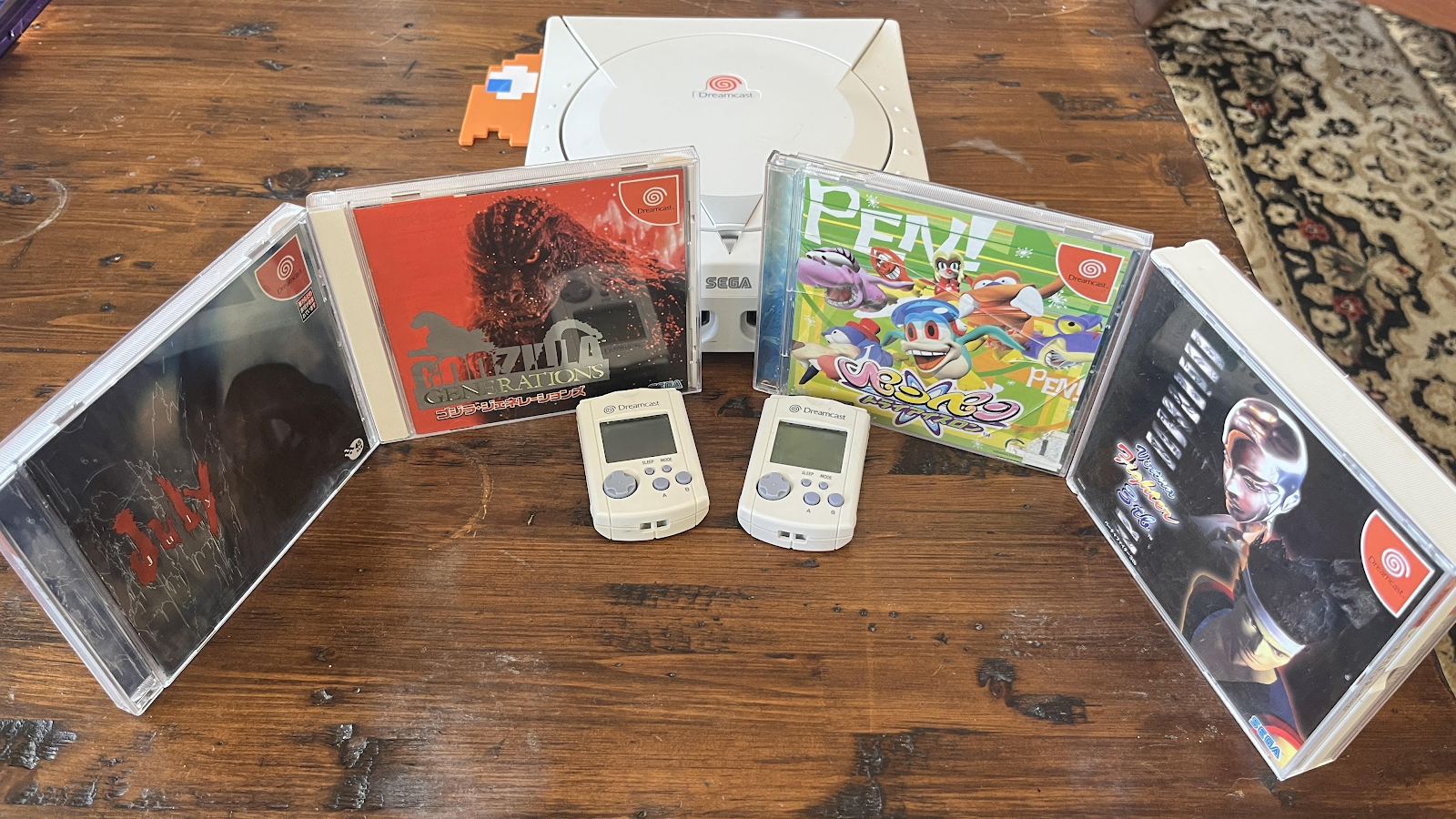
Well, shit. It’s been 25 years…or 300 months…or over 13 million minutes. That’s how long it’s been since Godzilla Generations was unleashed in Japan.

And the Dreamcast, too, for that matter.

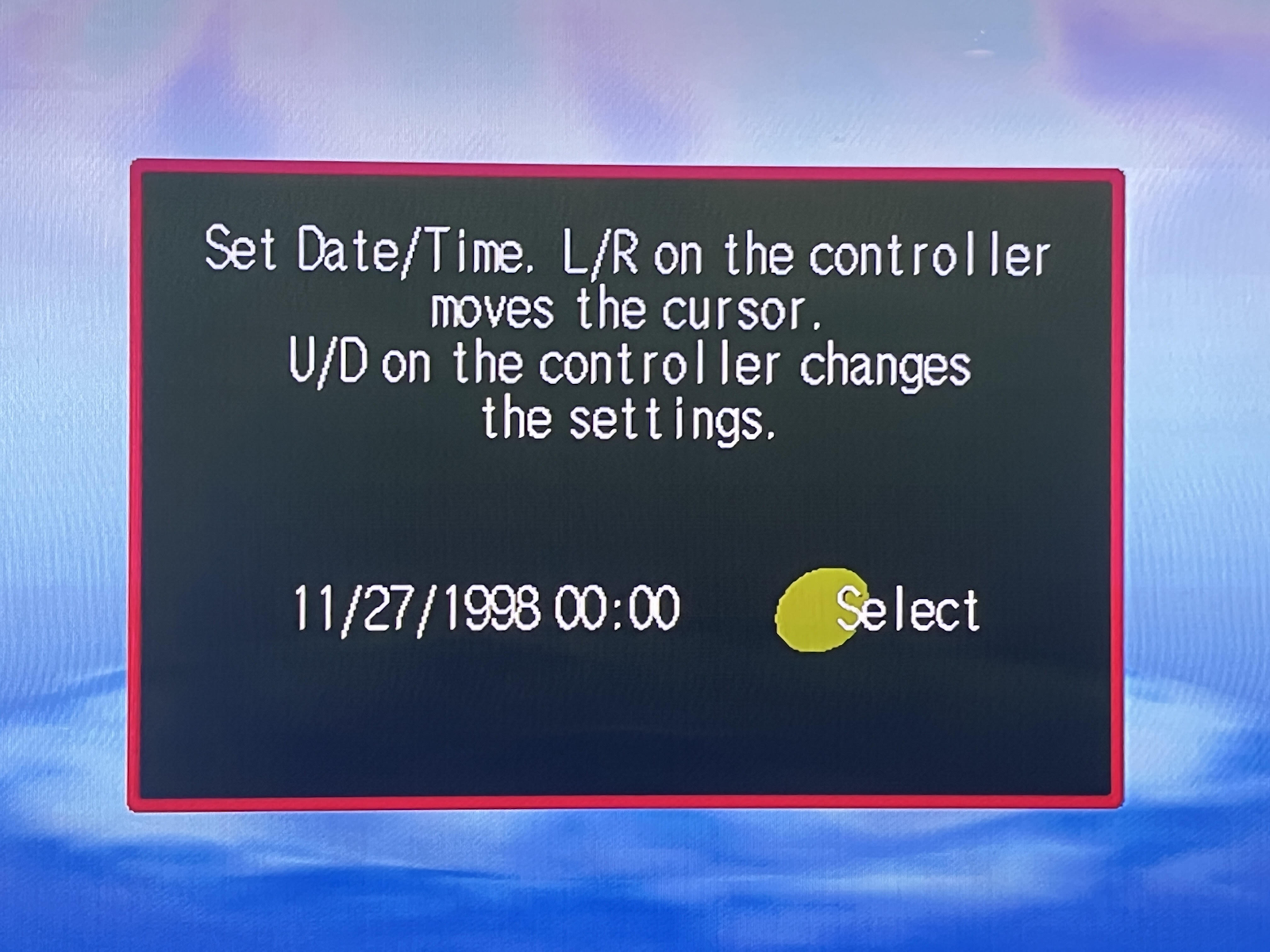
In our house, it's always November 27th, 1998.

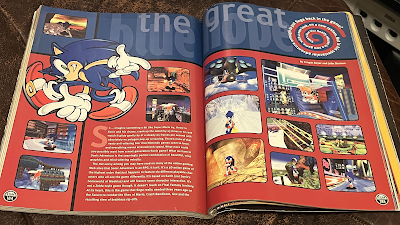
I was a tween when I first learned of Sega’s swansong console. Undeterred by President Shoichiro Irimajiri’s creepy disembodied head at the initial Dreamcast reveal, it was ultimately Sonic Adventure which ignited my hype for the platform and all the ambitious and imaginative experiences that would come to define it.

(From EGM #112 November 1998)
Don’t tell tween me that middle-aged me kept this tattered mag. He’d think it was weird and sad and he’d probably be right.

But the blue ‘hog was just the tip of the spear. With unprecedented visual and aural fidelity, groundbreaking online capabilities, intuitive hardware architecture, and a supplemental operating system, the Dreamcast fancied itself as both a developer-friendly haven and bleeding-edge forerunner of gaming’s future.

(Preserved by Unseen64.net)

Elsewhere on the software front, Virtua Fighter 3tb, Get Bass/Sega Bass Fishing, and Sega Rally 2 signaled a renewed commitment to Sega’s iconic arcade experiences at home. Blue Stinger, Pen Pen TriIcelon, and Climax Landers (eventually released as Time Stalkers in the West) flaunted their vibrancy and helped crystallize the Dreamcast’s aesthetic. AM2’s Shenmue – known as 'Project Berkley' at the time – promised to help reimagine how players might inhabit dense and bustling virtual spaces. Meanwhile, the presence of Biohazard: Code Veronica and D2 hinted at resurgent third party support from large and small game makers alike. And Godzilla Generations…was also there.

Although most of Sega’s in-house projects had yet to be unveiled in depth, they’d go on to spark a creative and innovative renaissance that continues to endear the Dreamcast to us a full 2.5 percent of a millennium later.

(From EGM's 1999 Video Game Buyer's Guide)
Some of the other games I was looking forward to.

In the meantime, Sega faced hurricane-force headwinds as it prepared to get the thing off the ground. The community has expressed no shortage of anecdotes for all the challenges stacked against the company at the time. Among them, people often blame the following:

  • Sega’s dwindling financial resources (i.e. capitalism*);
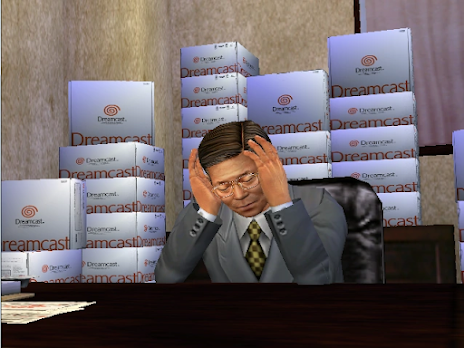
  • A merciless competitive landscape amid Sega’s diminished command of industry trends (also capitalism*);
  • The upcoming launch of the PlayStation 2 (capitalism strikes again!*);
  • Intracompany divisions over the direction and priorities for the Dreamcast across regions;
  • Sega's squandered goodwill with publishers, manufacturing partners, retailers, and consumers through several generations of missteps;
  • Minimal time to prepare for the Japanese launch, yielding a meager day one lineup and delays for several would-be launch window titles;
  • Shifting tides in consumer sentiment (sometimes people just like other things, you know?)
  • Sega being Sega;
  • Obama.

* I mean, maybe Sega just sucked at capitalism and that's totally OK. Would we really love the Dreamcast as much today if it had been managed by a more fiscally responsible and risk-averse company?

To me, Sega’s biggest challenges of the era were inseparable from its identity. The company’s deep-rooted stubbornness and rebelliousness – while enabling its uncompromising creativity and ambition – led it to hang its fortunes on innovations the public was not yet ready to embrace (e.g. online console gaming). At the same time, Sega continued to cling to established conventions which had fueled its past success and legacy but were falling swiftly out of vogue, globally (e.g. its arcade-centric ethos). In straddling the future and past, Sega found itself awkwardly out of step with gaming's present.  Sega was a perpetual pioneer yet it struggled to meet people where they were, or adapt enough to counter its competitors’ most basic strategies to woo them. Sadly — insomuch as we can feel sad for a for-profit corporation — the world was growing ambivalent to Sega’s presence and there wasn’t much anyone could do about it.

(From the What's Shenmue? Dreamcast demo)

In many ways, the Dreamcast’s Japanese launch reflected the history of this turmoil. And charmingly, Sega owned it. The company responded by promoting the platform in perhaps the most human way imaginable. Senior Managing Director Hidekazu Yukawa (R.I.P.) became the literal face of the Dreamcast to the point his image was emblazoned on a later edition of the console’s retail box. People knew him as Mr. Sega.

Sega’s Japanese Dreamcast advertising campaign was unconventionally humble and earnest, a likely reflection of Yukawa-san himself. Abandoning the brutish bluster of Segata Sanshiro’s salesmanship, Yukawa wore a friendlier face and carried a more genuine demeanor. Acknowledging the dire situation Sega found itself in, he made a gentler appeal to players. He was simply grateful for the chance they may invite the Dreamcast into their homes.

(via Advermax on Youtube) 
Yukawa-san was just doing his best.

The Yukawa TV ads rolled with the punches with humility if not grace. In an early spot, demon children haunted Yukawa’s nightmares, exclaiming they didn’t need Sega just before a rift opened and swallowed him into an abyss. And when production challenges hobbled Sega’s ability to produce enough Dreamcasts to meet retail targets, Yukawa-san dedicated an ad to apologizing for the stock shortages while fans pelted him with trash (gamers, amirite?). Meanwhile, his wife wondered when he’d be done with making all these stupid commercials. It was a pitiful ad campaign in that Yukawa-san and Sega actively solicited our pity.

So yeah. Sega was having a rough time even without a new generation of competition looming in the next millennium. As such, the company aimed to seize as much of a head start as possible, hastening the Dreamcast to the Japanese market just to get it out into the world. No doubt Sega of Japan needed to start generating revenue and building a user base sooner rather than later. So as a byproduct of that, there was little time to develop games ahead of the Japanese launch. In fact, the Dreamcast rolled out with four whole titles on day one.

The Dreamcast lobster

I recently revisited those Japanese launch games, so I'll ramble about them next...

Nakoruru: The Gift She Gave Me - Samurai Shodown Spin-Off for Dreamcast Translated into English!

After nearly two years of hard work, I am absolutely elated to inform you that a team consisting of Derek Pascarella, Duralumin, Marshal Wong and myself have completed our English translation of Nakoruru: Ano Hito kara no Okurimono for the Sega Dreamcast, and today you will be able to play it.

Being a fan favourite character of SNK’s beloved Samurai Shodown fighting franchise (known as Samurai Spirits in Japan), it’s only natural that Nakoruru would get her own spin-off game. SNK granted developer Inter-Let's the privilege of crafting a story that explored her character in finer detail, with the result being Nakoruru: The Gift She Gave Me (as we’ve decided to dub it), a Japan-exclusive visual novel game released for Windows in 2001, with an improved Dreamcast version releasing a year later in 2002. To take a source material known for its intense arcade fighting thrills and adapt it into a quiet, heartfelt text-based adventure was definitely intriguing, so much so that it made us want to produce an English translation almost two decades later! 

To translate the game into English was no small feat, however. With over 12,000 lines of text, our translation of Nakoruru was going to take us more than a year to produce. But it honestly feels like that time has flown by, because the more we worked on translating the scripts, the more we fell in love with the game's plot and characters.

Mikato meets Nakoruru for the first time.

The game’s story is told from the perspective of seven-year-old Mikato, an orphan who is taken in by the people of the snowy village Kamui Kotan. She is selected by the village's chief to serve as assistant to the shrine maiden Nakoruru, somebody the people of Kamui Kotan admire for her strength, dependability, and outward positivity. Mikato soon realises, however, that deep down, Nakoruru is harbouring an intense sorrow. 

While Nakoruru is based in the world of Samurai Shodown, it can be played without any prior knowledge of the franchise, but if you are a Shodown fan, there are quite a few playful references to other characters in the franchise sprinkled throughout the game's script.

Nakoruru's childhood friends Yantamu and Manari.

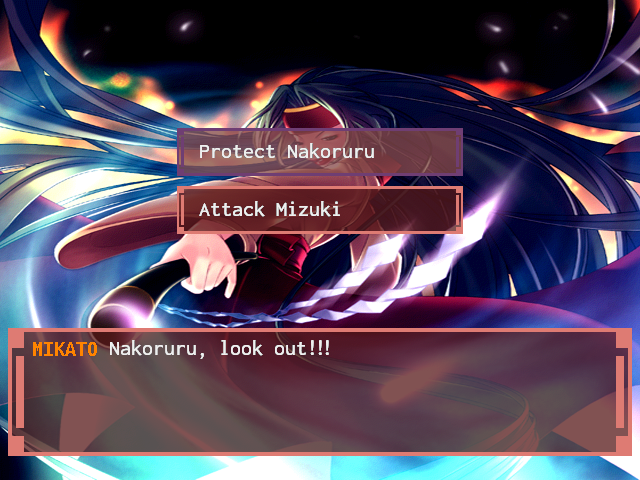
The gameplay of Nakoruru is simple, and familiar to those who have played a visual novel before. Advance the story with a button press, and occasionally make choices, some of which greatly affect the game’s narrative.

Also included throughout the story are several basic but charming mini-games. These include quizzes, fishing, dodging enemy attacks, playing music, and more. 

While Nakoruru may lack the 3D graphics and arcade action many associate with the Dreamcast, it still boasts gorgeous, crisp, hand-drawn 2D artwork, and its beautiful coming-of-age storyline will pull at your heart strings as it deals with topics of friendship, loss and insecurity. The Dreamcast received over 100 visual novel titles in Japan, and in terms of quality, Nakoruru is up there with the best the system has to offer. For those new to the visual novel genre, you can learn more about them in this fantastic video by Bowl of Lentils.

Combat training mini-game where you dodge left or right to escape attacks.

We adopted an assembly line process to translate the game’s script. First, dialogue for an individual scene would be translated by Marshal and Duralumin, then the editors - both myself and Derek, would check over the translations for any spelling or grammatical errors, but primarily to ensure they read as naturally as possible in English. Once the script edits were complete, Derek would insert them back into the game. Working together and seeing the story come to life, and by our own making, was incredibly rewarding. 

Making an important decision in the heat of combat.  
But our translation would have been for nothing if it wasn’t for Derek’s hacking wizardry. The Dreamcast is still in an immature state when it comes to debugging and hacking, unlike other systems, such as PlayStation, which is more streamlined. A project like this for the Dreamcast required a slew of different tools to achieve. Along the way, Derek had to make many tweaks to the game so it worked with our translation, such as modifying mini-games, ensuring the character’s voice audio persisted across multiple textboxes, reallocating where RAM data was written to make room for larger text data, and more. But the biggest challenge Derek faced was implementing a half-width font (as Japanese characters are wider than English ones), which took him months, but felt incredible when he finally pulled it off. The end result of Derek's hard work is fantastic-looking English text displayed in game.

Let’s take a look at Dreamcast: Year Two

Back in July 2020, Dreamcast: Year Two - the sequel to Andrew Dickinson's Dreamcast: Year One book - went to Kickstarter and smashed its funding goal within 64 hours. It took a while to get finished, but is now complete, printed, and gradually making its way out to backers. As somebody who was involved in the creation of this book, I'm really excited for everybody to get their hands on what has been created here.

And with that, I must now insert my obligatory 'conflict of interest' disclaimer. Unlike the first book in this series, which Tom reviewed on the blog upon its release, Dreamcast: Year Two has full involvement from The Dreamcast Junkyard, and even sports our branding on its back cover. When we interviewed Andrew for our podcast, the DreamPod, little did we know it would be the start of a great friendship, and that he'd eventually go on to join The Dreamcast Junkyard team himself. Because of this, you will also find written content from Junkyard members Brian Vines, Kev Mason, James Harvey, Lewis Cox (me!), Mark Williams, Mike Phelan and Tom Charnock in this book. Myself and Tom also assisted with editing and proof reading. Oh, and we all backed the project too. With all of that in mind, this article will not be a review, but merely a "look" at Andrew's new book.

If you would like to have a peek behind the curtain to hear more about the process of this book's creation and the Kickstarter, I recommend you listen to Andrew's recent appearance on The Sega Lounge podcast.

Dreamcast: Year Two and the accompanying DCY Zine.

So, the book. Just like its predecessor, Dreamcast: Year Two again uses the format originally created by Sandeep Rai for his PS Vita: Year One book (with his blessing, of course!) This time, the book covers the events that occurred in the world of Dreamcast between April 1st 2000 and March 31st 2001. This includes the console's cancellation, the advent of online gaming, the appearance of many notable games, and much more. All of this is presented alongside the excellent art of illustrator Dan Tiller, whose colourful style, with its many paint splatter effects, is a stark contrast to the very clean artwork of Dreamcast: Year One. Andrew explains that there was a clear rationale for this design choice: "I wanted something a bit messier, to show how messy the second year [of Dreamcast] was. It was really colourful and bright and amazing, but it was also the end of the Dreamcast and things were going wrong!" He also went for a predominantly blue theming over Year One's orange, ‘cause European blue swirl for life, yo.  

Other than the Junkyard team, the book also contains writing from members of the wider community such as Retro Faith, the Dreamcast Years crew, and Dreamcast Hub, as well as a great piece from the creator of the 'Years' book format, Sandeep Rai.

After some introductory pages (including a foreword by the Junkyard’s founder Tom Charnock!), the book begins with a detailed breakdown of the events of Year Two, written by Andrew. First, he covers why many consider it to be the Dreamcast's "golden year", before hitting us with the one-two punch of reality that in the grand scheme of things, the Dreamcast wasn't doing quite as well as we thought. Not only was there the looming threat of the PlayStation 2, but poor attempts from Sega to quash rumours that the future was looking grim for the Dreamcast and that Sega were to become a third-party developer wasn't doing much to reassure fans. 

Andrew then takes us back to that devastating moment when the news of the Dreamcast's discontinuation reached the masses, and reflects on how fans at the time handled the news, excellently summed up using Elisabeth Kübler-Ross' five stages of grief model. This analogy-based chapter is definitely one of my favourite pieces of writing I've read from Andrew. Well done, sir.

This segment is then followed by a collection of interviews. One of Dreamcast: Year One's strongest suits was its interviews, and the interviews in Dreamcast: Year Two are excellent too. The selection of interviewees is nicely varied, each hailing from a different creative background, but with an appreciation for the Dreamcast in common. The interviewees are as follows:

  • Corey Marshall (voice actor, English voice of Ryo Hazuki in Shenmue)
  • Darren Jones (Retro Gamer magazine editor-in-chief)
  • Adam Koralik (YouTube Creator)
  • John Linneman (YouTube Creator, Digital Foundry)
  • Iain Lee (TV Presenter, Channel 4's Thumb Bandits)
  • Forbes Longden (Dreamcast Today founder)
  • Mickaël Pointier (developer, V-Rally 2's Dreamcast port). 
It was particularly interesting to hear many of these guys reflect on their memories of first hearing the news of the Dreamcast's cancellation. Even more harrowing than that news, however, is Adam's story about losing a red Code: Veronica Dreamcast controller at airport customs. That tale is going to haunt me for a while...

After the interviews come some longer form articles covering a range of topics. These articles are a new addition for Dreamcast: Year Two and fit naturally within the page order. Dreamcast and Saturn Junkyarder Brian Vines' piece "Beyond Saturn" explores the many ways in which the Dreamcast picked up where its ill-fated older brother, the Saturn, left off. Brian's article is followed by Sandeep Rai's, in which he waxes lyrical about the Dreamcast's many excellent Capcom fighters. After this, Retro Faith provides some great insight into the origins of online gaming, and how the Dreamcast introduced this now hugely popular feature to a generation of console gamers. Finally, our very own Mike Phelan talks about the Dreamcast's many weird and wonderful peripherals (there's a lot).

Review: Andro Dunos

I did consider labelling this post as a 'retrospective' as opposed to a 'review,' and that's because Andro Dunos is not a new game for the Dreamcast. It's not a new game, period. Indeed, this latest release physical for the venerable old console represents something of an enigma in that it's an officially sanctioned release of a game that was previously released a long time ago in an unofficial guise. Are you confused yet? I know I am. But allow me to attempt to unpack this little conundrum.

See, Andro Dunos is a Visco developed side (and occasionally vertical) scrolling shooter that was originally released for the Neo-Geo AES and MVS platforms back in 1992, and which was subsequently made available for the Dreamcast using the Neo4All emulator in the mid 2000s. Indeed, you may have even seen (or possibly own) a copy of the lesser-spotted physical release of Andro Dunos that was previously available, which was essentially a printed CD-R containing Neo4All and an Andro Dunos rom file, presented in a rather nice folded cardboard sleeve. There was a similar Neo Drift Out release too, if memory serves (found them!)...but I digress.

As far as I can tell, this latest iteration of Andro Dunos for Dreamcast is almost identical to the aforementioned (it even displays the Neo4All icon on the VMU screen), albeit with a few subtle differences; the main one being that this is an officially sanctioned physical release with full license from Visco Games and limited to just 2000 copies, all of which come with a rather nice certificate of authenticity and a choice of PAL or NTSC jewel cases, professionally printed manual and case inlays, and the same type of top quality printed CD that you would expect from veteran Dreamcast publishers JoshProd and PixelHeart.

Just taking a moment to appreciate the physical presentation of Andro Dunos (I went for the PAL cased version as the NTSC flavours are not yet - at the time of writing - available), it's really quite hard to fault the level of care that has gone into the package. As mentioned above, you get a nice (if slightly threadbare) instruction manual, some excellent original box art, a little holographic sticker on the back of the box denoting which of the 2000 numbered copies you have acquired (mine is 0332 - what's yours?), and then there's a signed cardboard insert vouching for the authenticity of the copy in your possession. It's a nice touch, I must admit.

But what of the game Andro Dunos itself? Well, it's a pretty bare bones affair in all truth. Set against the backdrop of an alien invasion of Earth, players are thrust into the cockpit of the Yellow Cherry fighter ship and tasked with battling through 8 levels of increasingly more difficult enemies, many of whom seemingly only exist to waft onto the screen, fire a shot and then either exit or propel themselves at your ship, kamikaze style. Naturally, you are armed with a complement of weapons systems which are actually quite similar to those seen in Sturmwind, and these are used to blast your way through the unending swarms of baddies and the numerous multi-staged end of level bosses.

I never played the original Andro Dunos back in 1992, simply because I didn't own a Neo-Geo. I did have a school friend who professed to own one of SNK's mythical systems, but when I went to his house to see/play on it, he claimed his mother had thrown it in the bin because - and I quote - "she didn't know what it was." Because that's something that happens in reality, Chris. You know who you are. 

The upshot of these blatant school boy lies, is that the Dreamcast release of Andro Dunos is my first real experience playing it, and when compared to the other shooters available on the platform, it leaves me a little cold.