Showing posts sorted by date for query III/3. Sort by relevance Show all posts

The Sega Dreamcast Controller is Getting a Second Analog Stick — Dream Color Plus Mod Update

The Sega Dreamcast was the only console of the sixth generation to have a controller with a single analog stick. (Yes, the GameCube did technically have a second analog stick, you’ve just got to squint a bit.) This lack of a second stick is a criticism often directed at the Dreamcast’s controller, and is even sometimes erroneously cited as a reason for the console’s downfall. Sure, having two sticks might have greatly improved a few first-person shooter games for those without Sega’s own mouse and keyboard, but the dual-analog control scheme that is now standard in modern gaming wasn’t really popularised until Halo: Combat Evolved came out on the Xbox (I know it came earlier with Alien Resurrection, but have you seen how much reviewers hated the way that game controlled upon release?)

Quake III Arena. Credit: Dreamcast Live

For those who want to play games like Quake III Arena with a regular pad the modern way, methods have existed for years to connect and remap dual-analog controllers —like those of the PlayStation 4 and Xbox One— to the Sega Dreamcast. But what about a standard Dreamcast controller with dual sticks? A few months back, we reported on an upcoming mod for the Dreamcast’s controller called Dream Color Plus, which not only makes it wireless but also allows it to display Visual Memory Unit graphics in colour, simply by replacing the existing PCB with a new one. While chatting with one of the fine gents involved in the project, Nai Adventure, he gave us a full rundown of the features the DC+ would include, so check out that interview to learn more about the specifics of all these. One thing he did mention during that conversation was the possibility of the DC+ accommodating dual sticks. Well, the developers revealed their prototype build demonstrating exactly that. Thanks to Rapaz in our Discord for bringing it to our attention.

The Dream Color Plus prototype controller board with a second stick. 

During a livestream last night, Angelo Pontes, designer of the DC+ PCB, showed off a revised prototype version that includes a second analog stick. Of course, to accommodate this brand new (ahem) appendage, a new front shell for the controller would need to be created, and so this was 3D printed. You can see the 3D printed shell below. From what I understand, the print model will be open-source, meaning it will be available to the masses to print themselves, although backers of this project’s upcoming crowdfunding campaign will get the option to request one.

Dream Color Plus plus second stick plus 3D printed shell (plus, plus)

Most importantly, the team confirmed they’ve got the second stick working. The Dreamcast's maple protocol actually supported two analog sticks officially, it's just that the console never had a controller that had them! Believe it or not, both Quake III Arena and Unreal Tournament were actually programmed to natively support two analog sticks, and will reportedly work with the DC+'s dual-stick setup straight out of the box. For games that don't have this compatibility, some button remapping will need to be done by the player in-game, or changed on the Dream Color Plus’ VMU display. The DC+'s dual sticks will also work with games that support the Dreamcast Twin Stick peripheral, like Cyber Troopers Virtual-On Oratorio Tangram, and even indies like Xeno Crisis and Postal.

I did wonder if the placement of the stick so close to the face buttons could pose a usability issue, but Nai Adventure has said the final version won’t have the analog stick so close (Update 23/03: a much improved stick position can be seen here). He also confirmed that for those just wanting to get a Dream Color Plus with a single analog stick, the option will also be available. Additionally, he let me know that the final version will include a built-in microphone, so the list of features just keeps on growing.

Here's a great clip Nai Adventure put on Twitter of the prototype Dream Color Plus' dual-analog control in action, being used with the Dreamcast port of Grand Theft Auto III. Two things we thought would never be possible on Dreamcast!

It really seems like the Dream Color Plus is looking to course-correct some of the limitations of the original Dreamcast controller. Dual-analog controls, colour VMU graphics, wireless connectivity, on-board memory, built-in rumble, a microphone, and with no soldering? That all sounds great on paper. It’ll be interesting to see how everything works once we get our hands on it. Nai Adventure has confirmed a crowdfunding campaign will launch for Dream Color Plus this Saturday.

Inside the Machine: The Making of NBA 2K and NFL 2K for Sega Dreamcast

I sat down with two original NBA 2K and NFL 2K engineers to learn how they helped build the two iconic sports games and I ask: can 2K Sports make a return to NFL greatness?

Moore’s Law, as described by scientist Michio Kaku in his 2023 book Quantum Supremacy, speaks to the concept that “computer power doubles every eighteen months.” But perhaps with an exception — the Sega Dreamcast seemingly defied Moore’s Law when it debuted in 1999. Game titles NBA 2K and NFL 2K for the Sega Dreamcast by studio Visual Concepts looked and played like sports gaming in a new medium.

Based on Sega’s NAOMI architecture, the Dreamcast would offer a glimpse of what advanced computational processing and graphics processors are capable of today. The Dreamcast offered buttery smooth frame rates, and was one of the first machines to offer competitive online sports gaming. Even more, Sega Sports, with its slow-motion instant replay systems and its patented 2K-camera bokeh, created the illusion that the 2K Sports world was alive — and I wanted to learn more about how these games were made.

I spoke with two different tools engineers on the original NBA 2K and NFL 2K development teams to learn about the technical, translational nature to their work on what was the new Sega Dreamcast hardware. What follows is a rare, unexpected, and deeply technical look inside the original 2K Sports, exploring how Sega and Visual Concepts created the foundation of NBA 2K and NFL 2K.

Custom Tools Engineering and Maya


The first topic of conversation was custom tools engineering. What are custom tools in game development and why are they important? Visual Concept’s tools engineers built custom solutions to smooth out animations, lighting, and graphics when those assets were built in the Maya software suite and ultimately migrated to the final game engine environment. I discuss those topics first with 2K Engineer One.

DCJY: May I ask if you worked on gameplay or designed tools for the games?

2K Engineer (One): I was a tools engineer, mainly writing exporters and customizations for Maya. As far as I can recall, at the time VC did not have dedicated design staff. Design was done primarily by engineers and artists. Greg and Scott, the founders, also contributed to design.

Excellent. What kind of exporters and customizations for Maya? Anything gameplay oriented or for ratings, or for visuals? Player ratings are usually very mysterious for sports games players.

2K Engineer (One): Exporters were mainly about modeling and animation. Modeling includes level design, e.g. stadiums, lighting, and character design. Character animation started as mocap data, which always needs a lot of cleanup. For example, mocap will typically clamp rotations to +/-180 degrees; that can result in a discontinuity when the source data crosses the threshold. Things like the peak of a sinusoidal wave that crossed the limit will be snapped 360 degrees to the other side. Mathematically they are equivalent, but it’s confusing to see, and can introduce sampling errors along the discontinuities.

So I’d create Maya plugins that would automate curve clean-up, or to apply various lighting tricks, or other things to automate tedious work that artists and animators would encounter. Sometimes I might add custom user data to the elements in Maya; these would tend to be more design oriented. Ultimately it would all get exported in formats that could be consumed by the game engine.

Things like player stats were tabular, maybe done in Excel. I don’t remember specifically, but that would make sense.

Thanks for this breakdown. I think this explains a lot of things that come up in games, like clipping, and various quirky animations that need those custom solutions.

Editor’s Note:

The turn of the millennium gave way to the rise of 3D sports gaming and powerful hardware. With better hardware technology, new software was developed to take advantage of the new capabilities that the Dreamcast now offered. With new software came new programming languages, new disciplines, and the demand for cross-disciplinary skilled workers to make sense of it all.

Tools engineers and technical artists would prove to be a key for Sega Sports and Visual Concepts in maximizing the Dreamcast’s capabilities from launch.

Wipeout Ported, Segagaga Fan Translation Breakthroughs, Speed Devils now Online - Dreamcast News Round-Up April 2025

I must confess, there’s been a flurry of Dreamcast news these last couple of months that has largely passed me by. Distracted by the day job, some new(ish) part-time studies, and about a billion hours of pointing up the ugly paving slabs in my back garden (still somehow unfinished), I’d taken my eye off the ball. Fortunately though, a rainy Sunday has presented me with the opportunity to get caught up, and rather than taking notes just for my own benefit, I thought I may as well draft a news round-up for the Junkyard.

So, after dusting off my keyboard, pinching a list off Lewis, and conducting a systematic desktop review of relevant sources (skimming Dreamcast Talk), this is what I’ve managed to drum up. In no particular order, here’s what’s been happening in the Dreamcast scene lately.

Get in loser, we’re playing Dreamcast online

I know some folks take little interest in this aspect of Sega’s swansong console, but I MUST urge them to reconsider at every available opportunity, as 2025 is arguably the best time to be playing the Dreamcast online since its commercial heyday. We’re only in April and online multiplayer modes for several titles have already been launched or revived this year.

Most recently, in March, Speed Devils Online was brought back online thanks to the sterling work of Shuouma and flyinghead. As explained by PC Wizard in his Dreamcast Live blog post, Shu started work on this title way back in 2017, with some of us hoping that it could be cracked reasonably easily given that the game shares server code with the likes of POD 2 and Monaco Grand Prix Online (all developed by Ubisoft). Alas, it wasn’t as simple as that, but thankfully, eight years on, flyinghead has picked up Shu’s groundwork and managed to finally solve the puzzle.

Opening screen of Speed Devils Online for the Sega Dreamcast
Speed Devils Online opening screen, courtesy of Sega Retro.

Rewinding back a little further, in January the Dreamcast ports of two colossal PC titles were brought online. First of all, NuQuake, a version of Quake ported to the Dreamcast (thanks to mrneo420, dreameatergames, Ian Michael, BERO and Kazade), was brought online out of nowhere by a fellow called Maximqad. Why would you want to play the original Quake when the sublime Quake III Arena is available I hear you ask? Well, for one thing, NuQuake supports up to 16 players in a single match, far more than any of the officially licensed Dreamcast titles were able to manage. Fair warning though, if you do try NuQuake out, then a Dreamcast Broadband Adapter is highly recommended, as performance via dial up is currently still pretty sketchy.

The second port of a monster PC title that was brought online for the Dreamcast in January was no less than Counter Strike. Granted, unlike NuQuake which is publicly available, this title is still very much a work in progress and remains in a closed testing phase for now. Nevertheless, footage has been published by The Sega Guru showing the online multiplayer mode functioning via real hardware which is tantalising in and of itself. So, who’s responsible for this development? Maximqad of course. They’ve come out of left field, are rapidly stacking up big wins, and we’re all for it. God speed.

If battling it out over a phone line isn’t your vibe, then there are plenty of other reasons to get your Dreamcast online. For one, you could browse through the hundreds of thousands of internet radio stations available via the refreshed DCPlaya software released by Delux in February. Or, maybe you want to back-up your VMU saves, but don’t have a VM2 or one of those wacky cables Lik-Sang pushed back in the day? Well, now there is a web browser-based option in the wonderful Cloud VMU produced by Robert Dale Smith.

2025: year of the port

The last few months have seen an unprecedented wave of hefty high-quality ports released for our beloved little white box. Sometimes this blog may come across a little hyperbolic, but in this case I reckon there are reasonable grounds for getting hyped, and each of the following deserve your attention for varying reasons:

Wipeout box art snippet nabbed from Laced Records.

This month (April 2025) jnmartin84 released a port of the eternally cool Wipeout to the Dreamcast, which commentators such as The Sega Guys are (reasonably) touting as the best version of the game to date. Feature complete, running at 60fps, and with input remapping to allow for the Dreamcast controller, this is exactly the kind of work that we love to see. Check out the project’s GitHub page for more details.

Jnmartin84? Doesn’t that username ring a bell? Ah yes, that’s because in January, they also released a virtually perfect port of Doom 64 that features a whole suite of enhancements, some of which are exclusive to the Dreamcast edition, including real-time lighting. A gushing overview and interview with the developer from the Junkyard's founder, Tom Charnock, can be found here

Unless you’ve been entirely cut off from civilization lately, you’ll probably know that an alpha port of Grand Theft Auto 3 for the Dreamcast (yes, that still seems ludicrous to type) was released to the world on New Years Eve 2024. Without being paid a penny, a phenomenal international team of volunteers led by skmp achieved what many had thought would be impossible, thereby resolving a debate that has been running ceaselessly in the scene for nearly a quarter century. Oh, and as if that wasn’t impressive enough, they followed it up with a port of Grand Theft Auto: Vice City in April, as covered by Lewis for the Junkyard.

Altered screenshot of a Ken Rosenberg quote from GTA Vice City: "I poke my head out of the gutter for one freaking second, and fate shovels Dreamcast ports in my face."
Ken Rosenberg upon reading this blog post...

Unwilling to let the momentum fade, skmp is now beavering away at porting a more contemporary title, The Liquid Jet, to the Dreamcast too. In fact, Sad Mask Party’s “slimy and psychedelic” PC adventure game is so fresh that only a demo is available right now. It is hoped that the first level will be playable by the end of this month – stay tuned for further updates.

The Dreamcast Games We Want Back Online the Most

In the late 1990s, with the bitter taste of the Saturn's commercial flop lingering in their mouth, and the looming presence of a gargantuan new competitor on the scene, the folks at Sega rallied round the idea that they could revive their financial fortunes by getting a new home console onto the market. In that moment, high-stakes decisions needed to be made about the characteristics that would define what came to be known as the Dreamcast. What would the technical architecture of the hardware be? How would developers be brought on board? What direction would the branding take? How comically loud could the operation of the disc drive possibly be?

One concept that Sega firmly hung their hat on was online gameplay. The Dreamcast was to be the first home console to be online out of the box, a distinction which Sega hoped would have punters flooding forth with a much-needed cash injection into the company's coffers. Online gameplay was a central pillar of the Dreamcast brand, featuring front and centre in the console's marketing campaigns. In the States, Sega called on nu-metal titan Fred Durst to push SegaNet. Here in Europe, a range of tongue-in-cheek adverts were published that played to nationalistic jockeying (think harmless English-French banter, rather than the disintegration of Yugoslavia). Japan didn't miss the memo either, although a big chunk of their marketing eschewed the macho competitive aspect in favour of pushing the Dreamcast's internet capabilities to a female demographic. 

A selection of advertising materials focusing on the Dreamcast's online functionalities,
from left to right: USA, France, Japan.

Of course, during it's official lifetime, the Dreamcast never got close to fulfilling the upper limit of its "up to 6 billion players" tagline. However, Sega did erect a superb online architecture that allowed hundreds of thousands to experience online competitive and cooperative gameplay for the first time. Compared to the lifespan of the official servers of some contemporary games, many titles in the Dreamcast's online library had a damn good innings too. The official PAL and Japanese servers for the OG grandaddy of online RPGs, Phantasy Star Online, were maintained well into 2007, with hundreds of players logging on to say emotional goodbyes in the final couple of days (I'm not crying, you're crying). Others lasted even longer. The official servers for Starlancer, hosted by GameSpy, held on all the way to 2014, although we cannot be sure whether that was a deliberate stay of execution or some admins simply forgetting that the things still existed.

Source for dates: Online Consoles (dreamcast.onlineconsoles.com); DreamCast Online Gaming (dcog.netfirms.com, available via Wayback Machine); dreamcastlive.net; Sega press releases; sleuthing around old forums; and a smidge of informed guesswork.

However, regardless of the staying power of some, eventually every single online Dreamcast game had its official servers switched off. Luckily for us though, the scene has persistently had a cohort of skilled and generous technicians working in the shadows to revive these online functions through unofficial measures (shout out to the likes of bluecrabFlyingheadioncannonpetter3k, and Shuouma). More recently, they have even been bolstered by developers bringing brand new titles online, such as the indie smash-hit Driving Strikers, or freely distributed homebrew projects like ClassiCube, NuQuake and even Counter Strike

'There's an interesting story behind this Dreamcast game. In 1999 I remember it was. I got up in the morning and made myself a piece of toast. I set the toaster to three - medium brown...'

Alas, despite all this wizardry, there are still 64 games with online functions which have not been used since the day their official servers closed, 55 of which had fully fledged online multiplayer modes. Some of these titles, such as Unreal Tournament, are highly recognised and the status of their online multiplayer modes are asked after time and time again. Yet, I would contend that there are others which are actually worthy of more attention, and that is exactly what I hope to achieve with this article. So, with the customary rambling introduction over, let's get into it. Here are the Dreamcast games whose online revival I am anticipating the most...

Grand Theft Auto 3 for the Dreamcast - DCA3 Alpha Version Now Available

Japanese cover art mock-up courtesy of Dreamcast-Talk user k-do.
Most of you will likely know that a port of Grand Theft Auto III for the Sega Dreamcast has been in the works for some months now. Indeed, those outside the niche Dreamcast scene may have even heard the news given that the project gained coverage across the broader gaming press earlier this year, attracting everything from wide-eyed amazement through to cynical befuddlement. Back then, spectating the porting work was possible because the project was out in the open, with every ounce of progress laid bare for the public to see in real time.

In recent weeks though, this dynamic was lost as those at the heart of the project shifted to working in a behind-the-scenes fashion - most likely to reduce the risk of Rockstar putting the kibosh on the project before it had a chance to bear fruit. As such, we went from hearing near-daily updates, to a radio silence that carried the potential to feed cynical thoughts: where's my freaking GTA 3 already? What are those lazy no-good schlubs doing? Maybe a port wasn't feasible all along! and so on, and so forth. Fortunately though, even with the absence of a cheerleading public, it seems that the rapid pace of development didn't slow down one iota, as today the alpha version of DCA3 (top marks for this pun lads) has been released.

What does it stand for though? Can you do better than 'divine car abduction III'? Let's hear your suggestions in the comments please.

What does this mean exactly? Well, it means that, with a little jiggery pokery, you can compile a version of GTA 3 that will run on your Dreamcast. Given that it is an alpha version, bugs and occasional crashes are to be expected. Nevertheless, many testers have reported running the game for extended periods without issue, and, in my experience, the alpha version looks gorgeous and runs far better than I had expected it might. The controls map quite naturally on to the Dreamcast's regular controller (for the most part), and, perhaps most importantly, those who wish to progress with Claude through the game's infamous gangland story are be able to save progress to a VMU (although using one which is otherwise empty is recommended).

A key reason that you will need to compile your own alpha version, rather than simply download a ready-to-go .CDI or .GDI, is that players are expected to have their own legitimate version of the game. Morals and ethics aside, this is obviously an absolutely essential step to ensure the preservation of the porting project - any moves that have even the slightest whiff of piracy risk incurring the wrath of some extremely well resourced legal teams.

A sight to behold. Not the undecorated walls... GTA 3 on the Dreamcast!

Fortunately, compiling instructions are available. So, as long as you are capable of following these, have bought a copy of GTA 3 for PC (Rockstar offer a digital version with Vice City and San Andreas for a reasonable price), and have a Dreamcast that can play burned discs or has an optical drive emulator installed, then you should be good to go.

It would be wrong to drop this piece of news and not say something about the significance of the release. Really, it's hard to overstate what a monumental achievement the port is. In less than a year, an international crew of enthusiastic developers ('The Gang'), led by the mastermind skmp, have applied their skills to voluntarily deliver one of the defining games of the sixth console generation to the Dreamcast - a game that had begun development on Sega's swansong console, but instead ended up fuelling the stratospheric success of the arch-rival PlayStation 2, shifting 11 million copies for that console alone. 

In the intervening years the possibility of GTA 3 running on the DC has cropped up again and again as a topic of conversation in the scene, whether that be the technical flavour of 'could it be done?' or the alternative history variant of 'what if it had been?' The latter conversation may still plod on forever more, but the former is now totally dead and buried. Evidently, with the right skills and commitment, use of the free development library KallistiOS, and access to reverse-engineered code, it has now been definitively proven that the Dreamcast is more than capable of running this game.

Image created by Brazilian Dreamcast supremo NaiSan.

Of course, what is on offer right now is only an alpha version, but given the team's track record, it seems highly likely that the project will progress on to further iterations that buff out the rough edges. For now, all that's left to do is hear a few words from 'The Gang' themselves...

6 Games that Scratch the Shenmue Itch

There really isn't anything quite like Shenmue. As most Dreamcast fans know by now, the gameplay of Yu Suzuki's magnum opus, which juxtaposed snail's pace sleuthing around Japanese suburbia with frantic Virtua Fighter ass kicking, was polarising back when it surfaced in 1999. I am one of those many crazy people who absolutely loved everything Shenmue had to offer, especially the game's focus on the minutiae of everyday life. While some might prefer to escape to lands of medieval fantasy or vast universes of the future, I was completely entranced by the real world in which Shenmue was set, and the ordinary people that inhabited it. It felt like I'd finally found the game I'd always wanted to play.

In the 18 year absence of the series' third entry, I still needed something to scratch the Shenmue itch, and with many now wondering when a fourth instalment is going to happen, I find myself searching once again (seriously though, #LetsGetShenmue4). That's why I thought I'd present to you, dear reader, a selection of games that I believe capture the essence of Shenmue, some in more ways than others. Of course, I'm not implying that any of these games trump Shenmue in stature or quality. I'm simply suggesting that you may find some of the same enjoyment in them that you found that first time you assumed the role of Ryo Hazuki, as he set off on his quest to irritate his fellow townspeople with excessive deadpan and waste all his money on plastic Sega-shaped tat (a man after my own heart, really).

The Yakuza Series
For those of you who aren't aware of the Yakuza series (if you even exist at this point), it is a modern Sega franchise that often draws comparisons to Shenmue for obvious reasons. While Yakuza didn't necessarily copy Shenmue's homework, we'd be lying to ourselves if we didn't admit that the later games in the series definitely take some inspiration from Shenmue, at least when we compare the two at face value. A man walks angrily around a Japanese neighbourhood, beats up a load of thugs, chugs a drink, then heads to the arcade to play Space Harrier… I could be accurately describing Shenmue or Yakuza with that sentence, and the internet’s gaming population at large have picked up on these somewhat shallow similarities also. There’s not a single day that goes by without someone shouting "why don't you just play Yakuza?!" at some poor unsuspecting Shenmue fan on social media.
Image credit: New Game Network
When you start to play any of the Yakuza games, however, you soon learn that the series very much has its own identity and its gameplay differs in many ways to the adventures of Ryo Hazuki. Sure, later Yakuza games started to incorporate a lot of the same time-waster stuff that is a beloved staple of the Shenmue series, like arcades and gambling, but Yakuza is overall much faster paced, and its beat-em-up style of brawling is even more dynamic and ridiculous than Shenmue's. Think Dynamite Cop on steroids. Let's just say you're not really taking time to appreciate the scenery in Yakuza, unless that scenery is a bicycle you can pick up to smash a dude's head with. Which style of game you prefer is all down to individual taste, of course.
Image credit: New Game Network
What the two series do have in common though is a commitment to escapism. Just like Shenmue, the Yakuza games contain excellent stories, all featuring likeable characters and gameplay loops that will keep you immersed for hours on end as you bond with characters through missions and become fully encapsulated in Japanese nightlife. For those still longing for that fourth Shenmue, Yakuza is a pretty fitting game to fill the void, and with a whopping number of instalments to play that span multiple console generations, you've got plenty to work with. Go forth and be the best organised crime bloke you can be.

The Persona Series
In the past, Shenmue has been branded a "life simulator" by fans and critics alike. Well, if there was ever a series that took that concept and ran with it, it's the Persona games. Created as a spin-off of Atlus' dark-as-heck Shin Megami Tensei RPG series, Persona has grown from a quiet cult hit to a monolith franchise in the last decade. Combining turn-based RPG gameplay and creature fusing with (from the third game onwards) time management and relationship building, Persona will steal your heart and not give it back. Play it for a few hours and you'll soon find yourself thinking in the same mindset as the Japanese high school student turned defender of humanity you play as, asking yourself such questions as: "should I slay demons tonight or go sing some karaoke?"
Image credit: New Game Network
While turn-based RPG battling and creature training has more in common with Pokémon than Shenmue, Persona's commitment to exploring the finer details of real life and asking you, the player, to make decisions on how to spend the main character's precious free time definitely shares some similarities with what Yu Suzuki was going for back in '99. While Persona is a lot less interactive than Shenmue (it's a JRPG, so be prepared for text galore), it goes a bit further in some ways. In Persona, you form more than just one-sided Ryo Hazuki relationships, and most activities you do in your free time have purpose (such as karaoke), boosting stats of some kind, rather than being there to simply kill time.
Image credit: New Game Network
As far as recommending a game in this series to start you off, I'd say start with Persona 5 Royal or the upcoming Persona 3 Reload (both of which can be found on modern gen systems and PC), simply for their sheer size, depth of mechanics, and level of graphical detail. The best storyline, however, is definitely that of Persona 4 Golden, which was previously stuck on the PS Vita, but eventually got ported to PC and Nintendo Switch, along with eighth/ninth generation PlayStation and Xbox systems. Small town countryside vibes, combined with the best plot and characters of the whole series, definitely makes Persona 4 Golden a candidate for everyone's first Persona game. Reach out to the truth!

The Typing of the Dead’s Weird and Wonderful Ports


If you have never played The Typing of the Dead, then newsflash: you should. Who would've thought that taking the zombie-splattering action (and beautiful B-Movie voice acting) of The House of the Dead 2 and turning it into a typing game would've been such a great idea? Sega, that's who. For an uncoordinated person like me, who spends his time typing about pointless gubbins on the internet, the keyboard is my weapon of choice for zombie slaying.

I'm sure most who are at least aware of The Typing of the Dead know that it originally started life in '99 in Japanese arcades, before being ported to Dreamcast and PC in 2000, with English versions both releasing in America (but strangely not Europe) a year after that in 2001.

Credit: Thierry Régagnon on Flickr
Other than a typing version of The House of The Dead: OverkillExtended Cut in 2013, this was the extent of this series' releases in the West. Recently, however, I found myself tumbling down a rabbit hole, Alice in Wonderland-style, that revealed to me the existence of some weird and wonderful ports of this zany title, along with a spin-off and even a sequel that were all released exclusively in Japan. So let's talk about them...

The Typing of the Dead: Zombie Da! Typing Lariat (Windows and Mac, 2007)
First up, we have The Typing Of The Dead: Zombie Da! Typing Lariat, a Japan-exclusive enhanced version of the original game that was released for Windows and Macintosh in 2007. This version featured brand new mini-games as well as a mode where you could compete against a clone of yourself to best your previous score.

While there were two other enhanced Typing of the Dead ports released in Japan prior to this one (titled The Typing of the Dead 2003 and The Typing of the Dead 2004), that both added extra modes, this one is a lot more intriguing because of its Mac port, which was released to be compatible with Mac OS X Tiger (10.4). According to Macintosh Garden, this was 'one of the very few titles that Sega released specifically for Macs in Japan'. 

The absolute bestest thing ever about this port, though, is instead of the HOTD2 characters carrying keyboards with Dreamcasts hooked up to batteries on their backs, they carry Compact Macs. The fact the developers went to the effort to add in such a detail is great; what a beautiful sight to behold. Unless the mere existence of Macs give you an aneurism. If so, we'd hate to tell you how we produce the majority of the Junkyard's content...

Credit: Macintosh Garden

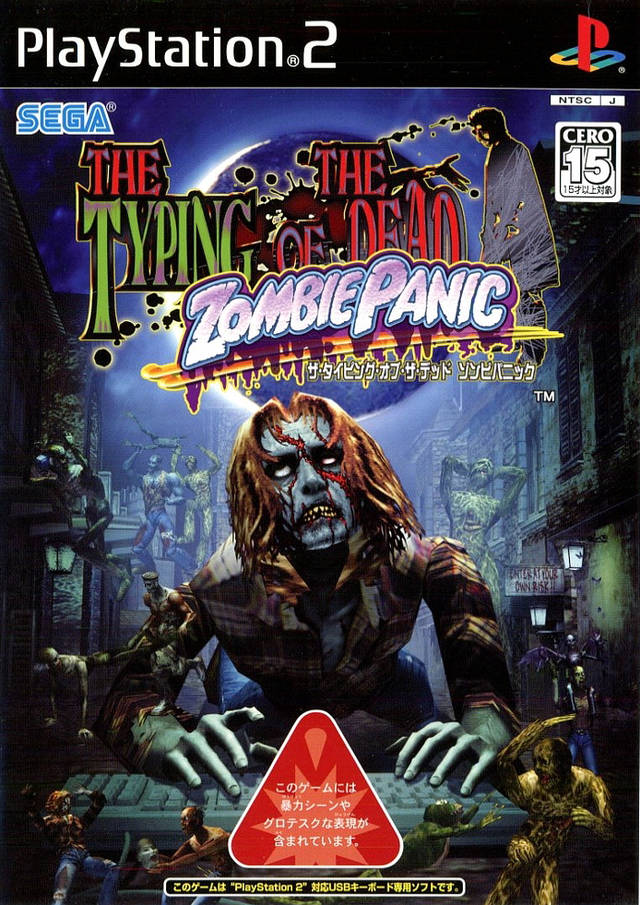
The Typing of the Dead: Zombie Panic (PlayStation 2, 2004)
From one disliked system to another (depending on who you ask), we now move onto The Typing of The Dead's 2004 Japan-exclusive PlayStation 2 port, which came bundled with a USB keyboard, and despite adding the subtitle "Zombie Panic", is mostly the same as the original. Although, according to the ever-helpful Sega Retro, this port incorporates mini-games into the main story. 

This version trades the Dreamcasts for silver fat PlayStation 2 consoles, which results in James and the gang looking like a bunch of Dreamcast deserters who got suckered in by the whole "Emotion Engine" thing. Hope you enjoy watching all those cutscenes in The Bouncer when you're not slaying zombies, you traitors. Bah!

English of the Dead (Nintendo DS, 2008)
Representing something of a missed opportunity, this 2008 Japanese Nintendo DS title was not titled "The Writing of the Dead," because what you have here is a game that aimed to teach Japanese players English words by having them handwrite them with the DS stylus. Occasionally, the game also asks players to complete sentences by selecting words multiple choice-style. Because of its premise, the game is very accessible to English players; although I bet after playing for a while your wrist would get tired (get your mind out of the gutter).

What blew my mind the most about this game, though, is that it recreates the levels of The House of The Dead 2 with some pretty decent 3D graphics for the DS. I recommend checking out this playthrough by NintendoComplete to see this title in action.

Oh, and the characters all carry Sega Mega Drives/Genesis on their backs. I'm not kidding.
Credit: NintendoComplete

The Typing of the Dead 2 (Arcade, 2007/Windows, 2008)
That's right, you read that correctly; exclusively in Japan, The Typing of the Dead received a numbered sequel in arcades and on PC, and it was based on The House of the Dead III! I genuinely had no idea this existed! Looking at gameplay footage of the PC version, it doesn't look like its inaccessible to English speakers (or typers, rather), as you still type English characters, but for the romanisations of Japanese words.

While we sadly never received the original House of the Dead 3 on Dreamcast, the spirit of the console lives on in this Typing of the Dead sequel, because while the characters now wield keyboard-shaped shotguns instead of regular keyboards hanging from their shoulders, they still carry Dreamcasts on their backs, just as they did in the original! 
Credit: NintendoComplete

How many of these Typing of The Dead games were you aware of? Are you going to give any of them a try? Let us know in the comments below!

Credit and thanks to: Mr^Burns who posted the SegaXtreme post that initially brought The Typing of the Dead: Zombie Da! Typing Lariat to my attention, Macintosh GardenSega RetroThe Wiki of the Dead and NintendoComplete.

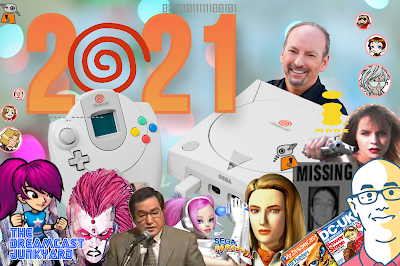
The Dreamcast Junkyard's choicest cuts and hottest takes of 2021

We close our eyes, and the world has turned around again. We close eyes and dream, another year has come and gone. So wrote the talented 16th century poet Allister in his priceless first folio. Ancient as these words may seem, they ring true even today, and here we are. It's approximatley 365 days since our last review of the year 2020 and we are back once again for the renegade master with another review of the past twelve months here at The Dreamcast Junkyard. 

Twelve whole months of reviews, news, podcasts and features; and we thought it only right to round them all up for your ease and enjoyment, just in case you missed some of them. We know you have busy lives, San Diego. Personally I'd like to say a huge thanks to the entire team here at the 'Yard, to the developers and community that still endeavours to create really awesome Dreamcast software/news content; and also to you - our readers - for continuing to visit and make what we do here worthwhile. Anyway, here's some curated highlights from 2021...

Reviews

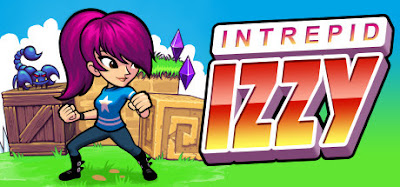
  • Intrepid Izzy - Lewis took a look at Senile Team's awesome action-platformer, declaring it a rather special experience that all Dreamcast owners should own.
  • Xenocider - Tom cast a critical eye over Retro Sumus' years-in-the-making 3D into-the-screen shooter, decreeing it to be the Sin and Punishment homage we all deserve.
  • Drascula: The Vampire Strikes Back - Mike took a look at this less than spectacular release that seemed to slip under many a radar.

Retrospectives

  • Surf Rocket Racers - James dipped his toe into the waters of Crave Entertainment and CRI Middleware's jet-ski racer, and found it to be quite a pleasant experience if not a Wave Race beater.
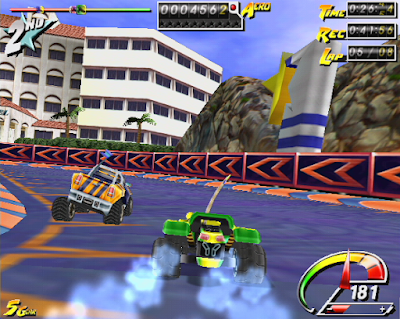
  • Stunt GP - RC vehicles tearing around locales strangely devoid of any human life? That's Stunt GP and Tom rather liked it.
  • Bang! Gunship Elite - Some see it as Starlancer's poor relation, but Bang! Gunship Elite is a decent space shooter in its own right. Find out why here.
  • Q*Bert - One of gaming's most well-known and foul-mouthed characters made an appearance on the Dreamcast, but was it really worth the effort?
  • Taxi 2 - Derek Pascarella released an English language translation of the French exclusive Taxi 2 earlier in 2021, and James decided it was time to take a fare in this elusive movie tie-in.
  • Wetrix+ - Earthquakes and torrential rain are the name of the game (poetry?) in this Dreamcast remaster of the Nintendo 64 puzzler...but is it worth a punt?
  • European Super League - One of the Dreamcast's numerous PAL-exclusive soccer titles, we thought it was a good time to take a look at Virgin's poor effort in the wake of the collapse of the real-life Super League.
  • F1 World Grand Prix II for Dreamcast - Tom did a few laps with Video System's Dreamcast F1 sequel, and included a potted history of the series too.
  • Sega Extreme Sports - James decided it was high time to catch some radical air with Innerloop's extreme sports title, and found the time to chat with the studio's CEO Henning Rokling, too.
  • UEFA Dream Soccer - At the other end of the footballing spectrum to European Super League, UEFA Dream Soccer is perhaps the finest recreation of the beautiful game on Dreamcast...for now at least.

Features and News

Interviews

  • Out of Print Archive - Andy and Neil, curators of the Out of Print Archive dropped by the Junkyard to discuss all things gaming magazines of yesteryear. In this revealing interview we covered the origins of the Out of Print Archive, the ingestion process and how the team decides which magazines should be preserved digitally.
  • WAVE Game Studios - Daniel from WAVE Game Studios stopped by to tell us about the origins of the newest publisher of indie Dreamcast games, and how they hope to kickstart a renaissance of Dreamcast physical game releases on store shelves.

DreamPod episodes

All of our podcast episodes can be found on your favourite 'podcatcher,' or simply by going to our Buzzsprout site here. Alongside our usual chaos, we did have some great guest epsiodes in 2021 and those are detailed below.

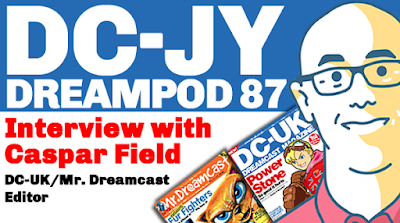
  • DreamPod Episode 87: Caspar Field - Former editor of Dreamcast print magazine DC-UK Caspar Field joined the DreamPod team in January to speak about his memories of the magazine and how it all began; the short lived Mr Dreamcast magazine project; and Caspar also recounted his experiences working in game development.
  • DreamPod Episode 88: Video Game Esoterica - Game preservationist extraordinaire Anthony Bacon, of YouTube Channel Video Game Esoterica, joined the DreamPod to speak about Dreamcast oddities, Kenji Eno's D2, and his own quest to educate the world on the fate of the 3DO M2.
  • DreamPod Episode 90: Dreamcast in 1999 - The Dreamcast Years podcast crew joined the DreamPod for the first of 2021's crossover episodes, this time to talk about the Dreamcast scene in 1999.
  • DreamPod Episode 91: Dreamcast in 2000 - Once again co-hosted by the Dreamcast Years crew, the second crossover episode of the year focussed on Dreamcast and wider pop culture in the year 2000.
  • DreamPod Episode 93: Dreamcast translations - The DreamPod welcomed stalwarts of the Dreamcast fan translation scene Derek Pascarella and Burntends to talk all things Sakura Wars Colmuns 2 and the wider efforts by the translation community.
  • DreamPod Episode 100: Peter Moore & Listener Questions - For the momentous occasion marking 100 episodes of DreamPod, the crew answered listener questions; but also welcomed former SEGA of America president Peter Moore onto the show to talk about his history with the Dreamcast.

Videos

You may already know that we have a YouTube channel, but we also have a Twitch channel too so be sure to check that out. On our YouTube we regularly hold livestreamed discussions (lovingly titled 'bookclubs'), and below you'll find links to some of these Kev-hosted video chats.


Things we were asked not to feature because we're 'content thieves, and everybody in the Dreamcast community knows it'

  • Castlevania Resurrection


Once again, thanks to you for reading, listening to and watching our Dreamcast related nonsense over the past year (well, past 16 years!). If you'd like to support what we do, you can do so at Buy Me a Coffee. Please also feel free to join our Discord and get involved in the chat.

Remember to stay safe, stay cool, keep Dreaming and stay tuned in 2022 for even more of the same.